
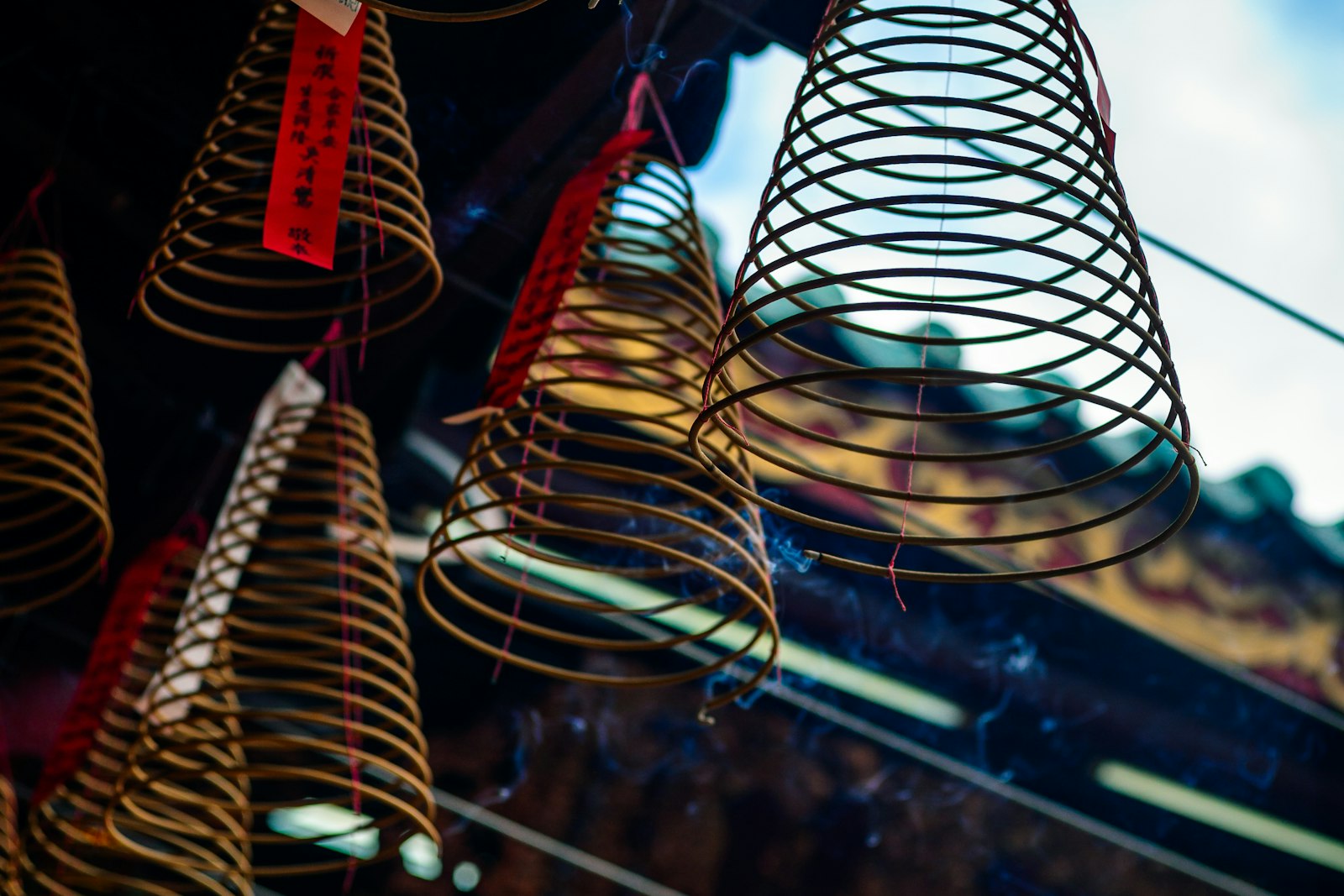
Bioenergy rests on the idea of an invisible life force that surrounds and permeates the body. This idea is not new. For thousands of years, across different parts of the world, especially in the Far East and Asia, people have spoken of an invisible energy that keeps the body alive and determines its health and balance. In this article we look at the origins of the concept of bioenergy, the ancient practices of the Far East, and how this idea is understood today.
A Concept from China: Qi
One of the deepest roots of the bioenergy tradition lies in China. Qi, often translated as vital energy or life force, sits at the centre of Traditional Chinese Medicine as the energy that nourishes and animates the body. Traces of the concept of qi go back to ancient inscriptions on oracle bones dating to the second millennium BCE, showing that the idea has existed in Chinese culture for a very long time.
The systematic medical framing of qi took shape around two thousand years ago in the ancient text known as the Yellow Emperor's Classic of Internal Medicine. This text holds that qi flows through the body along pathways called meridians, that health arises when qi is in balance, and that illness arises when qi stagnates or becomes blocked. Practices such as acupuncture, Chinese herbal medicine, tai chi and qigong are all aimed at balancing and freeing this flow of qi.
The concept of qi did not remain confined to China. It spread across Asia through spiritual traditions such as Buddhism, Taoism and Hinduism. This shows that the idea of bioenergy is not tied to a single culture, but has spread across a wide geography and thousands of years of history.
An Ancient Practice from Japan: Reiki
Another bioenergy tradition from the Far East comes from Japan. In the early twentieth century, a Japanese spiritual teacher named Mikao Usui, after a long period of seeking and fasting on Mount Kurama, described discovering a force he called universal life energy, one he found he could channel through his hands. The system Usui developed became known as Reiki.
The roots of Reiki lie in a Japanese energy practice called Kiko that Usui had studied in his youth, meditation and breathing exercises similar to tai chi and chi kung, along with spiritual traditions such as Shugendo, Zen and Tendai Buddhism. In 1922, Usui founded a Reiki school in Tokyo and taught the method to thousands of people over his lifetime. Hawayo Takata, who learned Reiki through Usui's student Chujiro Hayashi, brought the practice to Hawaii in 1937, introducing it to the Western world. Today Reiki is practised by millions of people worldwide, known as a practice that aims to balance the body's energy through light touch or contactless hand positions.
Another Ancient Source from India: Prana
A similar understanding has endured for thousands of years in India, the Far East's western neighbour. In the Ayurvedic tradition, prana is defined as the life force that animates the body and the entire universe. Yoga, pranayama breathing techniques and meditation are ancient practices developed to balance prana and allow it to flow freely. Though they emerged in different regions, the concepts of qi in China and prana in India converge on the same idea, an invisible energy that surrounds and nourishes the body.
A Common Thread: Different Cultures, the Same Intuition
Far Eastern and Asian cultures have given this energy concept different names. Called qi in China, prana in India, and mana in Polynesian cultures, these concepts converge on the idea that the human body is surrounded by and nourished by an invisible energy. This convergence suggests that the understanding of bioenergy is not a belief unique to one region, but a shared intuition that humanity arrived at independently across different geographies.
The Modern Counterpart of the Bioenergy Concept
Towards the end of the twentieth century, Western science also began taking an interest in these ancient concepts. At a workshop convened by the U.S. National Institutes of Health, researchers coined the term biofield to bring these energy-based practices from different cultures under a shared framework, defining it as a massless field that surrounds and permeates the body. Today this field is studied in the United States under mind and body practices by NCCIH.
This scientific framing can be seen as a modern restatement of an ancient intuition thousands of years old. Qi in China, the universal life energy of Reiki in Japan, prana in India, and today's concept of the biofield are different expressions of the same underlying idea across different times and cultures.
Conclusion
Bioenergy is not the invention of a single culture or a single era. From China's understanding of qi, to Japan's tradition of Reiki, to India's concept of prana, to today's scientific terminology of the biofield, this ancient idea represents humanity's shared heritage in trying to understand the body and its life energy. Bioenergy balancing practices rooted in these ancient traditions serve today as a complementary wellness practice, supporting a person's overall balance and sense of wellbeing without replacing medical treatment.
References
- 01Qi Energy in Chinese Medicine, Yo San University
- 02An Introduction To Qi Energy: Signs Of Imbalance and How To Get Back On Track, Evolve Wellness Centre
- 03What Is Chi or Qi Energy? Complete Guide to Life Force Energy
- 04Qi, Vital Substance in TCM, Me and Qi
- 05What is the History of Reiki?, International House of Reiki
- 06Where Does Reiki Come From?, Earl E. Bakken Center for Spirituality and Healing, University of Minnesota
- 07Mikao Usui, Wikipedia
- 08History of Reiki: Read about the Origin and Traditions of Reiki, International Association of Reiki Professionals
- 09What Is Biofield Energy Healing and How Does It Work?, Biology Insights
- 10Sprengel, M. L., Teo, L., Allen, S., Ijssennagger, N., Hammerschlag, R., Dyer, N. L., & Crawford, C. (2025). Biofield Therapies Clinical Research Landscape: A Scoping Review and Interactive Evidence Map. Journal of Integrative and Complementary Medicine
- 11National Center for Complementary and Integrative Health (NCCIH), U.S. National Institutes of Health
This article is for informational purposes only and does not constitute medical advice. Bioenergy is a complementary wellness practice; it does not replace medical diagnosis or treatment. Please consult a physician for any health concerns.